Ticket Booth
Entering
The offer, the cost and the first move before the gate.
The world after the crowds
A working language of entrances and exits, speed and stillness, distorted mirrors, collisions and roads home.
After closing
After closing, the spectacle falls away. The bulbs dim, the machinery cools and what remains is the structure underneath. That is often where the truth of a situation begins to show itself.
This ground is personal
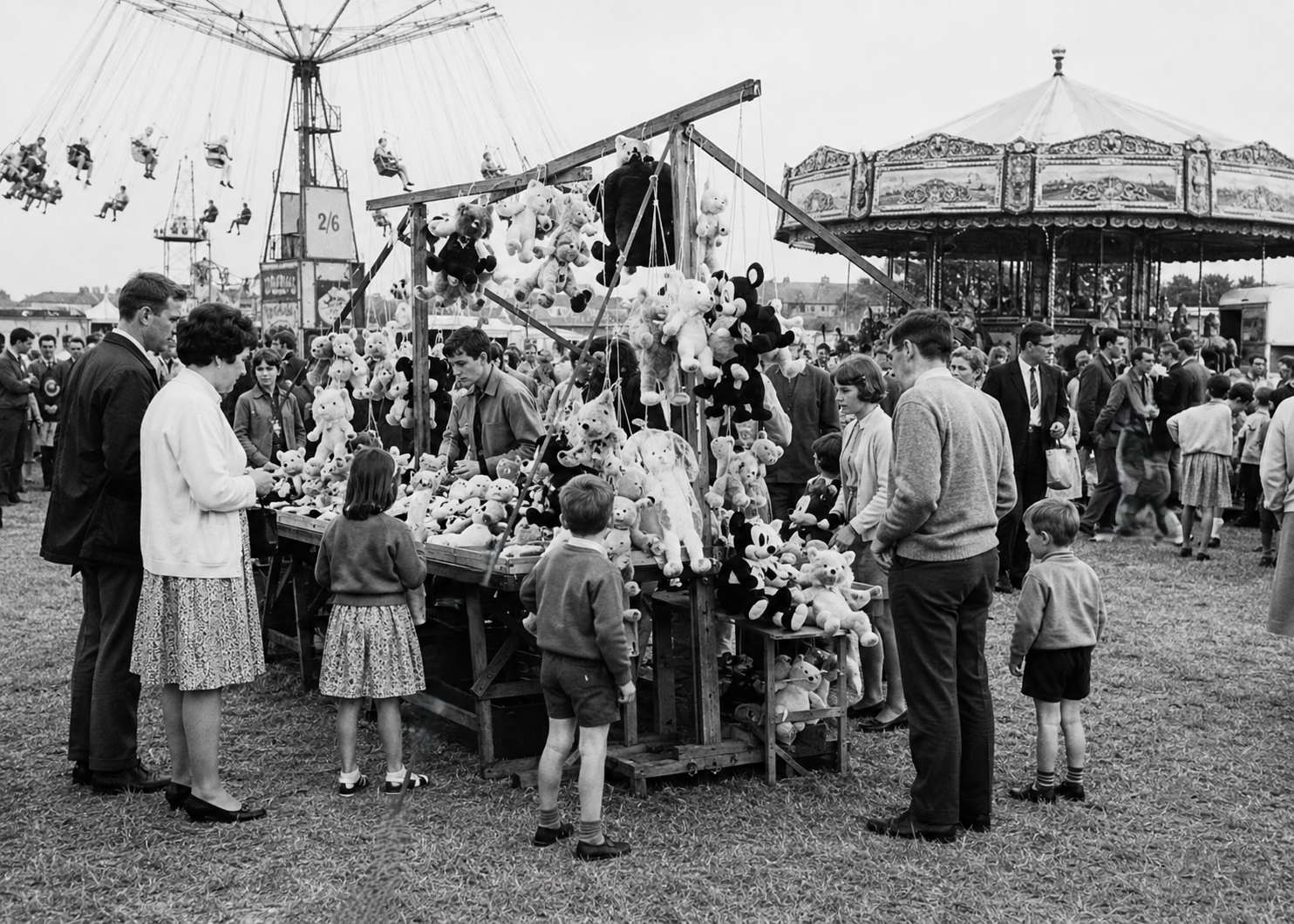
The fairground was part of my childhood long before it became the language of my readings. My father had two stalls selling fancy goods and toys, and part of my early life was spent travelling to fairs and fetes. We sometimes stayed overnight at the grounds before moving on to the next place.
There was a strong travelling fraternity. The same families and familiar faces would appear again at different venues around the country, so the fairground was a moving community as much as a place of entertainment.
It was through that community that divination first became part of my own story. I began reading ordinary playing cards when I was about nine. Among the people I learned from were members of Romani families I knew through the fairground circuit, some of whom were experienced practitioners themselves. Through repeated meetings and time spent together, I was introduced gradually to card reading, tarot, palmistry and the crystal ball. It was practical learning, passed from person to person rather than picked up as a ready-made system.
I later moved into Tarot, and the Tarot de Marseille eventually became my principal working deck and the house language of Dusty at the Table. The fairground did not become the theme because it looked interesting. The stalls, the road, the familiar faces and the cards were already part of the world in which the reading work began.
Read more about my story →Why it stayed
You feel the anticipation before the gate, then the lights, sound and movement pull you towards a ride or stall. There is excitement in trying your luck, and uncertainty in not knowing quite what will happen next. Returning years later can feel both strange and familiar.
The fairground stayed with me because it describes life unusually well. Some things pull you in. Some spin you round. Some collide with you. Some distort what you see. Some frighten you. Some give you a better view. Some keep going long after they should have stopped. And sometimes the most important thing is knowing where the exit is.
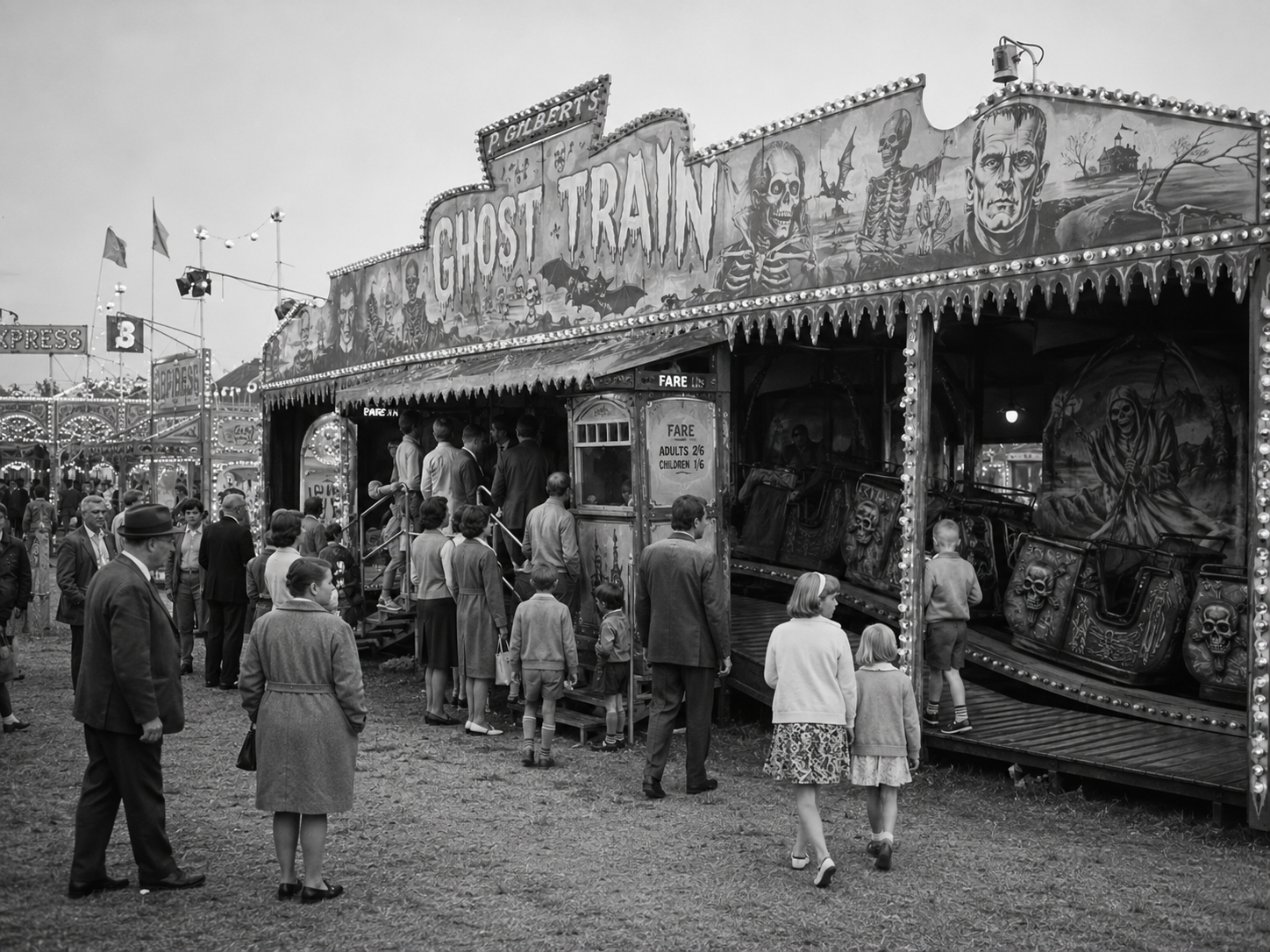
The fairground is working ground: timber, canvas, steel, trailers, bulbs, generators, weather, labour and the road between one stop and the next. It is setting up, packing down and moving on. That practical reality matters as much as the spectacle.
A map of the ground
Entering
The offer, the cost and the first move before the gate.
Collision
Different directions, mixed signals, friction and reaction.
Momentum
Repetition, gathering speed and going round again.
What follows
Fear, memory, familiar scares and the same track dressed in different scenery.
Distortion
Roles, expectations, distorted perception and the difference between what is reflected and what is real.
Perspective
Distance, scale and seeing the whole ground from above.
Risk
Pressure, speed and the line that cannot be sustained forever.
Transition
The old ground behind you, the threshold ahead and the cost of standing still.
Leaving
The point at which remaining costs more than departure.
From the ground to the Table
At Dusty at the Table, the fairground gives the readings their language, structure and point of view.
It provides a practical way to examine patterns, pressure, friction, movement, repetition, distorted perception, threshold moments, breakdown points, perspective, exits, returns and choices. That is why the names of the readings are meaningful rather than whimsical.
The Table is where I conduct the readings. Amelia belongs to the wider Dusty world as a guide and storyteller at the liminal edge, where the lit ground gives way to the road beyond it.
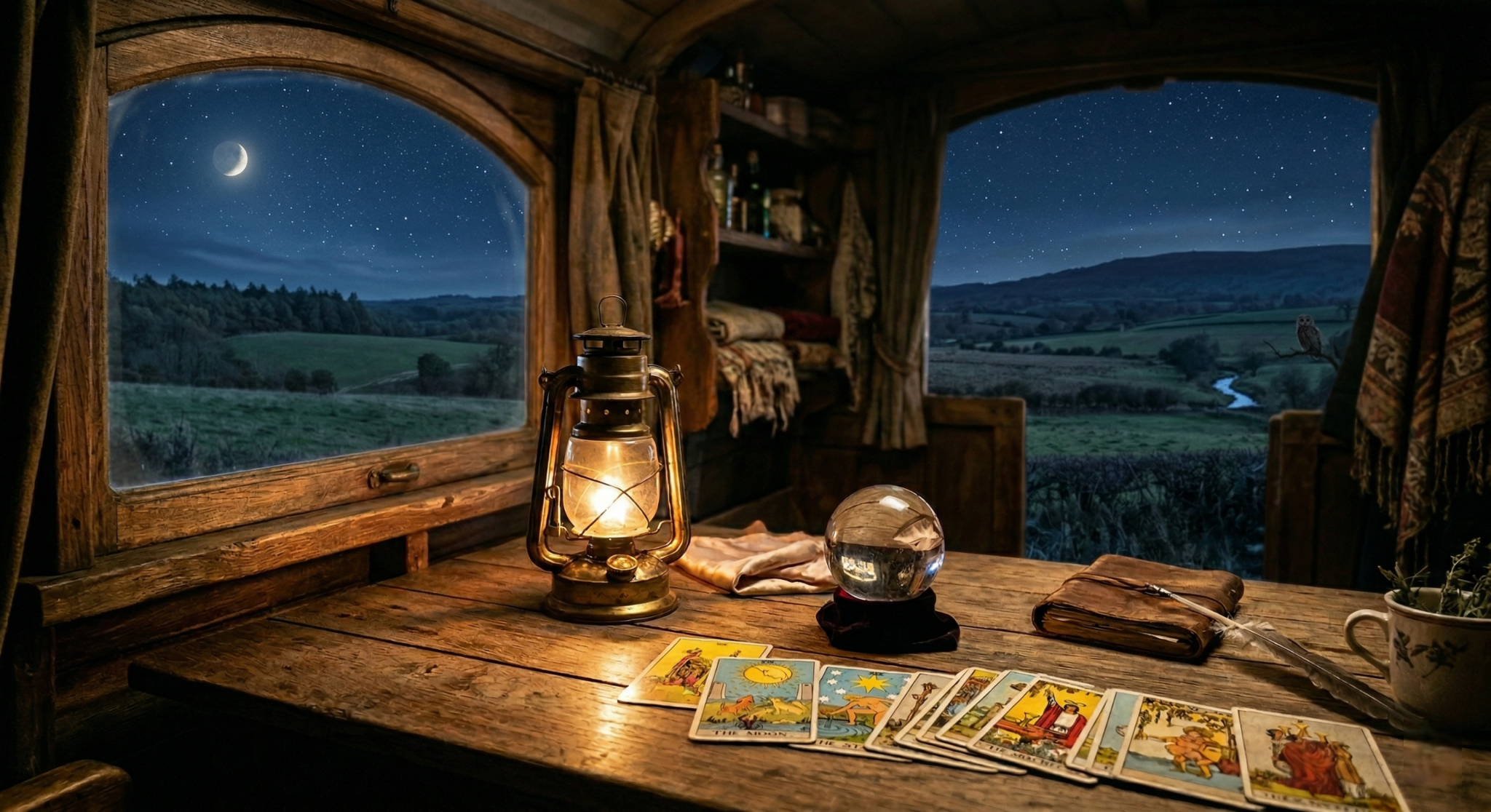
The road after closing
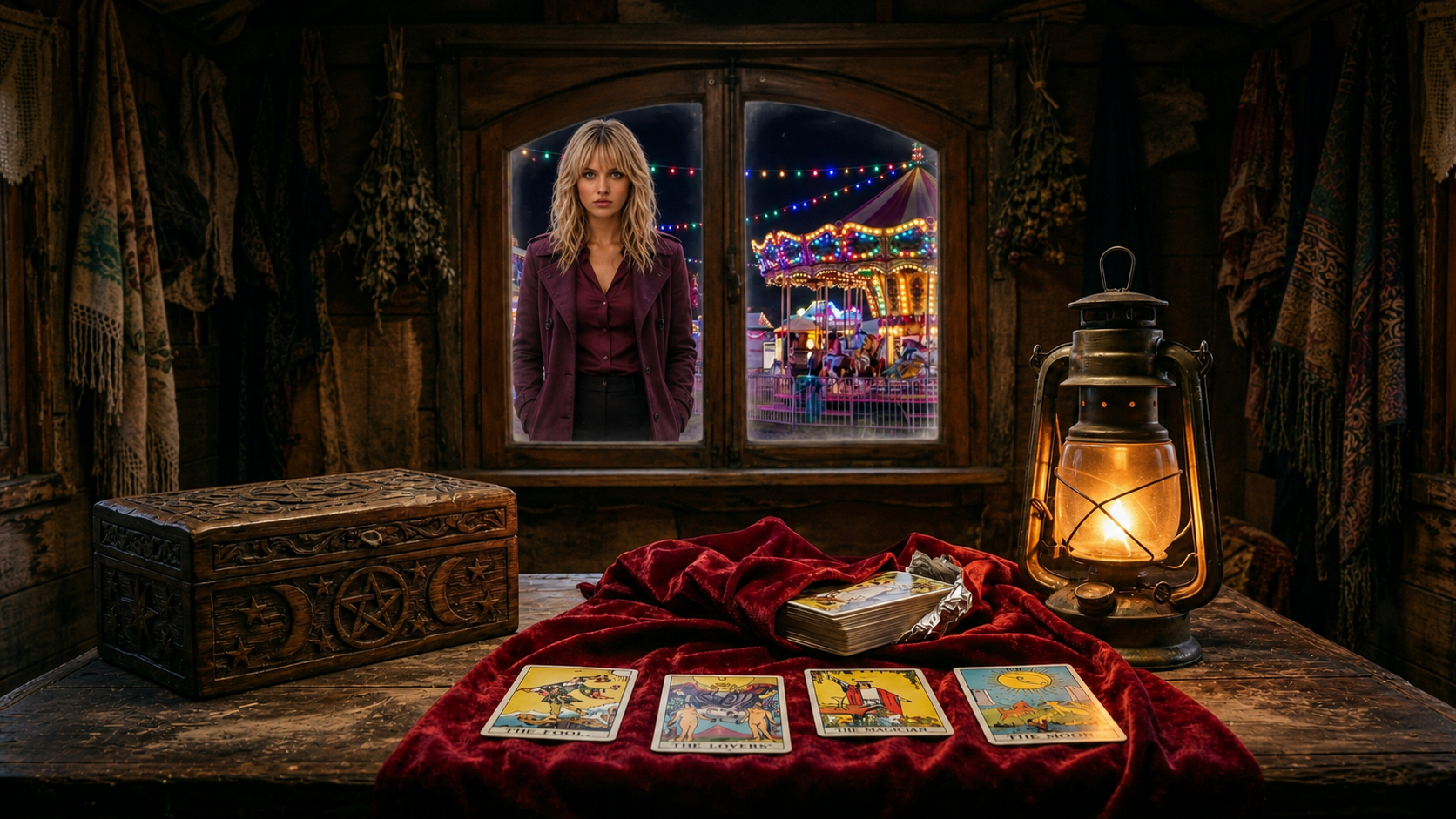
The quiet after the fair has its own clarity. The ground is packed down, the lights are behind you and the road opens towards the next stop.
Readings often work in much the same way. Once the noise, spectacle and immediate pressure settle, the underlying pattern becomes easier to see. Mystery remains, but so do movement, perspective and the choice of what happens next.
How I work at the Table →Know which ride you are on?
Find the reading →